2026 Best 3D Fence Panels for Global Buyers?
The 2026 Best 3D Fence Panels for Global Buyers? This question now deserves more than a catalogue comparison. Demand is shifting toward welded mesh systems that combine visibility, corrosion resistance, quick installation, and controlled lifecycle costs. Grand View Research and Mordor Intelligence both report continued expansion across the global fencing and perimeter-security markets, although their estimates differ by region, product definition, and reporting year. That difference matters. Buyers should not treat one market forecast as absolute truth.
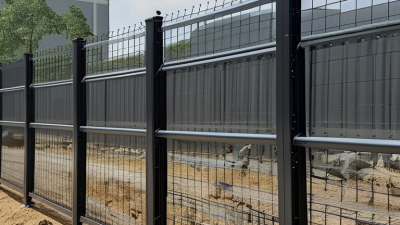
3D Fence Panels stand out through their V-shaped reinforcement bends. These folds improve panel stiffness without adding excessive steel weight. A typical commercial panel may use galvanized wire, polyester powder coating, or both. Coating quality remains decisive near salt air, industrial emissions, and heavy rainfall. ISO 1461 and ASTM-related coating references can help buyers compare protection levels, but local specifications still require careful checking. A beautiful green panel can fail early if its posts, clamps, or foundations are poorly matched.
“Fence performance begins with the complete system, not the panel alone,” says fencing-industry consultant Peter J. H. Evans. His point is practical. A 2.5-metre panel installed on shallow concrete may wobble under wind pressure. A thicker panel can still disappoint when drainage, soil strength, or gate alignment is ignored. Global buyers need transparent drawings, test data, coating certificates, and installation guidance. Price is only one piece.
There is no universal winner. Regional climate, security expectations, logistics, and maintenance budgets change the answer. This guide compares those imperfect variables, so purchasing decisions become more defensible, not merely cheaper.
3D Fence Panel Basics: V-Bends, Wire Diameters, Mesh Sizes, and Uses
2026 Best 3D Fence Panels for Global Buyers?
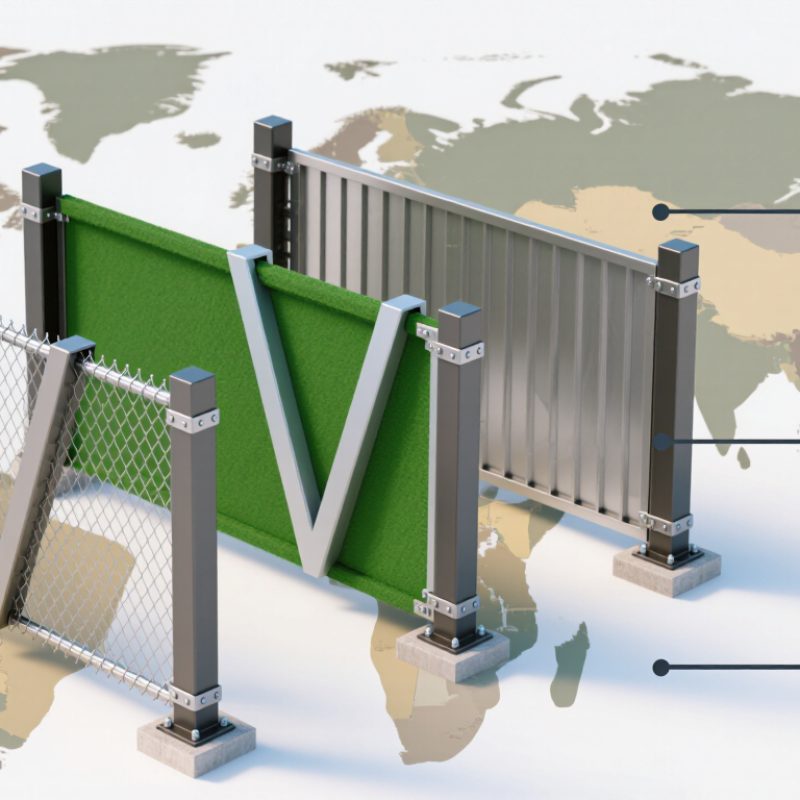
3D fence panels use welded steel wires with V-shaped bends across the panel. These bends add stiffness without greatly increasing steel consumption. A single bend improves shape retention, while multiple bends suit taller or wider panels. Do not judge strength by appearance alone. Wire diameter matters. Residential projects often use 4.0–5.0 mm wires, while industrial boundaries may require thicker wires and stronger posts. The correct choice depends on panel height, wind exposure, and impact risk.
Mesh size controls visibility, climbing difficulty, and small-animal protection. A 50 × 200 mm opening provides clear visibility and works well around homes, schools, and sports areas. Smaller openings can improve containment, but they increase weight and material cost. Buyers should also check welding quality, zinc coating mass, and the corrosion category of the installation site. Coastal air can punish a beautiful panel quickly.
The UN World Urbanization Prospects projects that 68% of people may live in urban areas by 2050. Demand for practical boundary systems will remain strong. World Steel Association data recorded about 1.89 billion tonnes of crude steel production in 2023, supporting broad material availability. Yet supply is not the same as quality. I still see buyers comparing only wire diameter. That is incomplete. Ask for test records, coating measurements, post spacing, and a sample panel before placing a large international order. Mistakes become expensive at the port.
Material Quality: ISO 1461 Zinc Coatings and EN 10244-2 Wire Grades
2026 Best 3D Fence Panels for Global Buyers?
Material Quality: ISO 1461 Zinc Coatings and EN 10244-2 Wire Grades
For 3D fence panels, zinc protection deserves more attention than surface appearance. ISO 1461 applies to hot-dip galvanized fabricated steel products. It specifies coating requirements, inspection methods, and minimum coating thicknesses. Ask for the measured coating thickness, not only the phrase “hot-dip galvanized.” A clean, even surface helps, but appearance alone proves little.
EN 10244-2 focuses on metallic coatings for steel wire. Its requirements cover zinc coating mass, adhesion, and testing. These details matter for welded panels exposed to rain, road salt, or humid coastal air. Buyers should confirm the wire diameter, coating grade, production stage, and test results. Pre-galvanized wire and panels galvanized after welding are not equivalent. Welded areas can need extra protection.
Request batch records and a certificate matching the shipped material. Check whether the certificate identifies the actual wire and panel production lot. A document can look convincing while missing test conditions. I have seen this gap create expensive disputes. It is easy to overlook.
Standards also depend on the agreed edition and project specification. Confirm these details before comparing quotations. A thicker zinc coating often improves service life, but design, drainage, cutting, and installation still influence performance. Even strong specifications cannot repair careless handling. End sections may suffer first. That small weakness deserves attention.
Global Buyer Comparison: Weld Strength, Corrosion Class, and Service Life
For global buyers, a 3D fence panel should be judged by weld integrity, corrosion class, and service life—not appearance alone.
A strong panel keeps clean, consistent weld nuggets at every intersection. Buyers should request weld-shear results, wire tensile strength, coating mass, and test conditions.
EN 10223-7 provides a useful framework for welded steel mesh specifications, but results still depend on wire diameter and panel geometry.
Corrosion protection needs local climate evidence.
ISO 12944 places outdoor environments into exposure classes, from low urban exposure to severe coastal or industrial conditions. Its durability ranges are indicative: medium durability means about 7–15 years, while high durability means 15–25 years before major maintenance. These figures are not guarantees.
Salt, standing water, cut edges, and damaged coatings can shorten service life quickly. The NACE IMPACT study estimated global corrosion costs at 3.4% of worldwide gross domestic product, showing why coating decisions deserve serious attention.
Hot-dip galvanizing, suitable powder coating, and sealed panel edges can improve resistance. Yet coating thickness alone is not enough.
I would inspect adhesion, weld-area coverage, and accelerated corrosion data. That step is often missed.
A practical purchase file should include ISO 9227 salt-spray results, ISO 1461 galvanizing records, and installation guidance.
Some test results look impressive but poorly match real coastal exposure. This remains a weakness in many comparisons.
2026 Selection Guide: Compliance, Total Cost, Supply Capacity, and Warranty
2026 Best 3D Fence Panels for Global Buyers?
2026 Selection Guide: Compliance, Total Cost, Supply Capacity, and Warranty
For global buyers, the best 3D fence panel is not always the cheapest option. A reliable selection starts with compliance, including wire diameter, mesh openings, coating method, packaging labels, and destination-country requirements. Request test reports and production samples before placing a large order. Paperwork matters. Practical procurement reviews often reveal delays caused by missing corrosion data or unclear specifications.
Compare total cost, not only the quoted unit price. Include posts, clamps, gates, inland transport, ocean freight, customs charges, installation labor, and replacement risks. A lower-priced panel may use thinner wire or inconsistent zinc coverage. Those differences later appear as bent edges, rust spots, or extra site work. Ask suppliers for a complete cost sheet with Incoterms, lead time, payment terms, and sample fees. Test the calculation against a real project.
Supply capacity should be checked through monthly output, raw-material sources, machine numbers, and quality-control records. A factory may promise volume yet struggle during seasonal demand. Confirm whether matching accessories and spare panels will remain available for several years. Warranty language also needs careful reading. Check coverage periods, coating exclusions, claim evidence, response times, and replacement freight responsibilities. My checklist is not perfect; it can overvalue documents and miss installation errors. A small pilot shipment and site feedback remain essential.
This 2026 benchmark compares common 3D welded fence panel purchasing factors for international buyers. Compliance refers to documented coating, welding, and dimensional quality; total cost is shown as a landed-cost index where 100 represents the highest benchmark cost. Actual results vary by panel height, wire diameter, coating system, order volume, destination, and shipping terms.