China has become a major manufacturing base for Security Barbed Wire used in industrial, commercial, agricultural, and infrastructure projects. Its supplier network includes large factories, specialized exporters, and regional producers. Their capabilities differ considerably.
Grand View Research identifies construction, agriculture, and security as important demand areas in the global barbed wire market. Fortune Business Insights also projects steady market expansion through 2030. However, published figures vary because researchers define products and applications differently. That inconsistency deserves attention. Buyers should compare report methodology, not only headline values.
Product quality is visible in practical details. Galvanized steel should resist rust around coastal storage yards. PVC-coated wire can provide another protective layer. Blade spacing, core-wire diameter, tensile strength, and coil length affect installation and performance. Factory inspection records matter too. A low price may hide uneven barbs, weak welds, or poor coating adhesion.
Bruce Schneier, a widely cited security expert, stated, “Security is a process, not a product.” The principle applies directly here. Security Barbed Wire cannot replace lighting, access control, maintenance, or responsible site planning. It should support a lawful, risk-based perimeter strategy.
Reliable Chinese manufacturers usually provide technical drawings, material specifications, sample testing, export documentation, and traceable quality checks. Buyers should request these records before placing large orders. Certifications can help, but they should be verified independently. Some supplier pages make broad claims without sufficient evidence. That is an uncomfortable issue, yet it deserves honest review.
This guide examines leading China-based manufacturers and suppliers. It focuses on product consistency, customization, delivery capability, documentation, and long-term value.
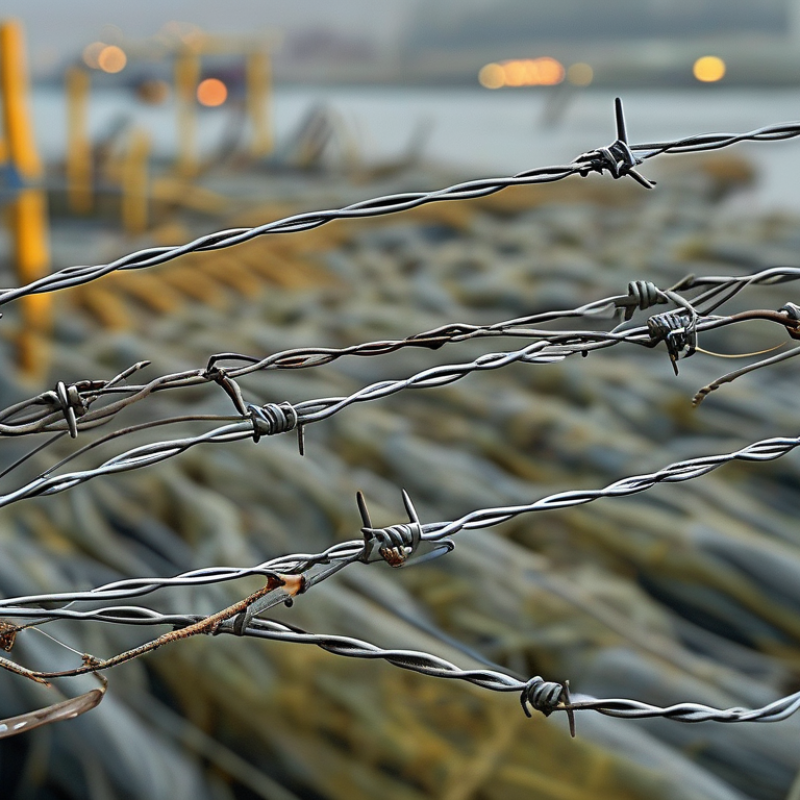
Barbed wire is a tensioned security barrier made from twisted steel strands and sharp barbs. The barbs are usually spaced at regular intervals, creating a visible obstacle along fences, walls, and restricted boundaries. Galvanized or coated steel helps resist rain, humidity, and surface corrosion. However, no coating lasts forever in coastal or industrial environments.
In security systems, barbed wire works as a physical delay layer. It discourages climbing, cutting, and accidental entry around warehouses, farms, utilities, and construction sites. Installers may place it above chain-link fencing, on angled arms, or along wall brackets. Its value increases when combined with lighting, cameras, access control, and routine patrols. Barbed wire alone cannot detect movement.
Details matter. Correct tension prevents sagging, while strong posts keep the barrier stable during wind and seasonal temperature changes. Field inspections often find loose fittings before serious damage appears. That small issue is easy to miss. Suppliers should provide material specifications, wire diameter, coating information, and installation guidance. Buyers should also confirm local safety requirements before ordering or installing it.
A practical design balances deterrence with maintenance access. Sharp barriers can injure workers, visitors, and animals when poorly positioned. Clear warning signs, controlled gates, and scheduled inspections reduce these risks. Some projects also need a softer perimeter solution, especially near public paths or residential areas. Security planning is rarely perfect; site conditions can expose assumptions that looked reasonable on paper.
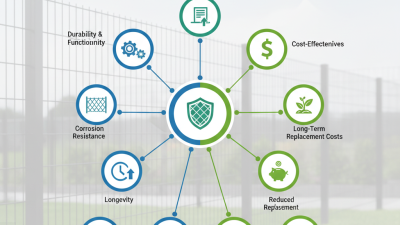
China’s security barbed wire market offers several practical configurations for perimeter protection. The right type depends on corrosion exposure, fence structure, installation height, and maintenance access. Galvanized barbed wire remains a common choice for farms, warehouses, and utility boundaries. Its zinc coating helps resist rain and humidity. Heavy-gauge versions generally provide greater tension stability. They also require stronger posts.
PVC-coated barbed wire adds a colored polymer layer over galvanized steel. This coating can reduce direct contact with metal and improve visual integration around managed sites. However, low-quality coating may crack under sunlight or repeated temperature changes. Stainless steel barbed wire suits coastal facilities and chemical environments where corrosion resistance matters. It costs more, but replacement work can be less frequent. That assumption is not always correct.
For higher deterrence, concertina barbed wire uses coiled loops with reinforced wire and evenly spaced barbs. It can be supplied in different coil diameters and clip arrangements. Flat-loop versions need less outward space than traditional coils. Installation should follow local safety requirements, with clear warning signs and controlled access during handling. Buyers should verify wire diameter, barb spacing, tensile strength, coating weight, packaging, and inspection records. A sample test is wiser than relying on photographs. Some projects choose the strongest option, although site geometry may make it unsuitable. Experienced suppliers should explain these trade-offs plainly.
Evaluating Chinese barbed wire manufacturers requires more than comparing quotations. Check factory registration, export history, and production capacity. Request recent inspection records, not carefully selected photographs. The World Bank’s 2023 Logistics Performance Index gave China a score of 3.7 out of 5, supporting strong logistics capability, but delivery performance still varies by region. Ask for the exact production address and shipping port.
Product evidence matters more than sales language. Confirm wire diameter, barb spacing, tensile strength, zinc coating, coil length, and tolerance. Ask for laboratory reports linked to the actual batch. ASTM A121 covers zinc-coated steel barbed wire requirements, while ISO 9001 certification can indicate documented quality procedures. It does not guarantee every shipment.
Inspect the details.
Use a pre-shipment inspection with random coil selection. Measure coating thickness, weigh a sealed coil, and photograph labels beside a calibrated instrument. UN Comtrade classifies barbed wire under HS 7313, helping buyers compare a supplier’s declared trade history with export records. Be cautious when a supplier refuses samples or offers an unusually low price. I have found that the cheapest quote often excludes packaging, testing, or inland transport. A factory may look professional and still lack stable material control. Ask difficult questions, and record every answer in the purchase contract.
| Evaluation Dimension | What to Verify | Typical Technical Reference or Benchmark | Recommended Evidence | Suggested Weight |
|---|---|---|---|---|
| Product Standards | Confirm whether the supplier manufactures according to recognized barbed-wire specifications instead of relying only on internal descriptions. | ASTM A121 for zinc-coated steel barbed wire; EN 10223-1 for zinc-coated steel barbed wire. | Applicable standard, product specification, inspection plan, and test report. | 15% |
| Wire Material | Check the carbon-steel wire grade, tensile performance, ductility, and consistency between the core wire and line wire. | The selected grade should match the agreed specification and intended fencing application; do not accept an unspecified “high-strength” claim. | Mill test certificate, tensile test results, material declaration, and sample inspection. | 10% |
| Wire Diameter | Verify the diameter of both the line wire and the barbs, including tolerance and measurement method. | Common commercial configurations include approximately 1.6–2.5 mm wire, but the purchase specification must define the exact diameter and tolerance. | Calibrated micrometer records, dimensional inspection report, and approved sample. | 10% |
| Barb Geometry | Evaluate the number of points, barb sharpness, barb formation, twist security, and uniformity along the coil. | Four-point barbs are widely used; common barb spacing is approximately 76–127 mm, subject to the buyer’s specification. | First-article sample, production photographs, dimensional records, and random coil inspection. | 10% |
| Zinc Coating | Check the coating type, coating mass or thickness, surface continuity, adhesion, and corrosion protection level. | ASTM A641/A641M covers zinc-coated carbon-steel wire; coating requirements vary by coating class and wire diameter. | Coating-mass test, coating-thickness test, adhesion test, and salt-spray data when contractually required. | 15% |
| Manufacturing Capability | Assess whether the supplier can produce the required wire diameter, barb spacing, coil length, surface treatment, and packing format consistently. | Capability should be demonstrated using a production sample made on the same process specified for mass production. | Factory audit, equipment list, process flow chart, capacity statement, and production trial. | 10% |
| Quality Management | Verify control of incoming wire, twisting, barb forming, galvanizing, final inspection, nonconforming products, and traceability. | A documented quality management system aligned with ISO 9001 is a useful indicator, but certification does not replace product testing. | Valid certificate, internal inspection records, corrective-action reports, and batch traceability samples. | 10% |
| Coil Length and Weight | Confirm the net wire length, coil outside diameter, coil weight, and permitted variation. A heavier coil does not always mean a longer coil. | Typical order specifications may range from about 100 m to 500 m per coil; exact length must be stated in the contract. | Length measurement, calibrated weighing records, packing list, and random shipment verification. | 8% |
| Packaging and Export Readiness | Review protection against moisture, abrasion, deformation, and handling damage during container loading and overseas transport. | Packaging should suit the transport route and climate, with clear marks for product type, batch, quantity, and handling. | Packing photos, packaging specification, loading plan, and previous shipment records. | 7% |
| Testing and Inspection Support | Determine whether the supplier accepts pre-shipment inspection and can provide independent laboratory testing when required. | Inspection scope should cover dimensions, barb spacing, tensile properties, coating, quantity, packing, and visual condition. | Inspection and testing procedure, sample plan, test reports, and corrective-action commitment. | 8% |
| Commercial Reliability | Compare quotation clarity, lead time, payment terms, communication quality, warranty handling, and ability to maintain agreed specifications. | The quotation should separately identify product specification, quantity, packaging, delivery term, payment term, inspection, and validity period. | Signed quotation, sales contract, production schedule, reference shipment documents, and response-time records. | 7% |
| Total Evaluation Weight | 100% | |||
Evaluation note: Technical requirements should be finalized in the purchase specification before requesting quotations. Standards and dimensional ranges may differ according to the destination market, coating class, wire grade, and intended application.
China’s leading security barbed wire manufacturers typically combine standardized production with practical factory controls. Experienced suppliers begin by checking steel wire diameter, tensile strength, and surface condition before drawing or twisting. Galvanized high-tensile steel is common, while stainless steel suits corrosive coastal or chemical environments.
Standards must match the destination market and project specification. Responsible factories maintain documented quality systems, often aligned with ISO 9001 principles, while testing products against applicable national or customer requirements. Inspectors measure barb spacing, strand diameter, coil length, and twist consistency. Small deviations matter. Uneven spacing can complicate installation and weaken visual uniformity.
Quality control continues after forming. Zinc coating thickness may be checked through laboratory testing, weighing methods, or coating gauges. Tensile tests confirm wire performance, while visual inspections identify sharp burrs, loose twists, damaged coatings, or poorly secured coils. Production batches should carry traceable records, including raw material heat numbers, inspection results, and packing dates.
Packaging also deserves attention. Moisture-resistant wrapping and firm coil binding reduce damage during transport. However, paperwork alone is not proof of dependable quality. A certificate can look complete while a handling defect remains unnoticed. Regular sampling, independent inspection, and clear acceptance criteria provide stronger protection. Even careful factories can improve; transport vibration and inconsistent manual checks still deserve review.
Zinc coating mass is a key quality-control indicator for galvanized barbed wire. Higher coating mass generally provides stronger corrosion protection, while the required value depends on wire diameter, coating class, and the applicable purchasing standard.
The chart presents representative procurement ranges in g/m² for galvanized steel barbed wire. Production inspection commonly includes coating-mass testing, wire-diameter measurement, tensile testing, barb spacing verification, surface inspection, and dimensional checks. Acceptance requirements should be confirmed against standards such as ASTM A641/A641M, EN 10244-2, or the buyer’s technical specification.
Choosing a top security barbed wire supplier requires more than comparing unit prices. Export capability matters. UNCTAD reports that over 80% of global merchandise trade moves by sea, so packaging and port coordination deserve close review. Ask for seaworthy coils, moisture protection, verified gross weight, and complete commercial invoices. The UN Comtrade system classifies barbed wire under HS 7313, helping buyers check customs descriptions and trade records.
Customization should be practical and documented. Suppliers may adjust wire diameter, barb spacing, coil length, coating type, and roll weight. Request a drawing, sample approval, and a batch inspection report before mass production. Galvanized coating thickness, tensile strength, and dimensional tolerance should match the purchase specification. Small details matter. A loose tie can damage cartons during handling.
Supplier selection also needs independent evidence. The World Bank’s 2023 Logistics Performance Index evaluates 139 economies through customs, infrastructure, logistics competence, and delivery timeliness. Use those factors when comparing export partners. Check factory capacity, traceability, response speed, and corrective-action records. ISO 9001 procedures can support consistency, but certification alone proves little. A flawless checklist is unrealistic. I would still require pre-shipment inspection, clear claims procedures, and transparent lead-time updates. Some suppliers offer impressive samples yet struggle with repeat orders. That weakness should be tested early.